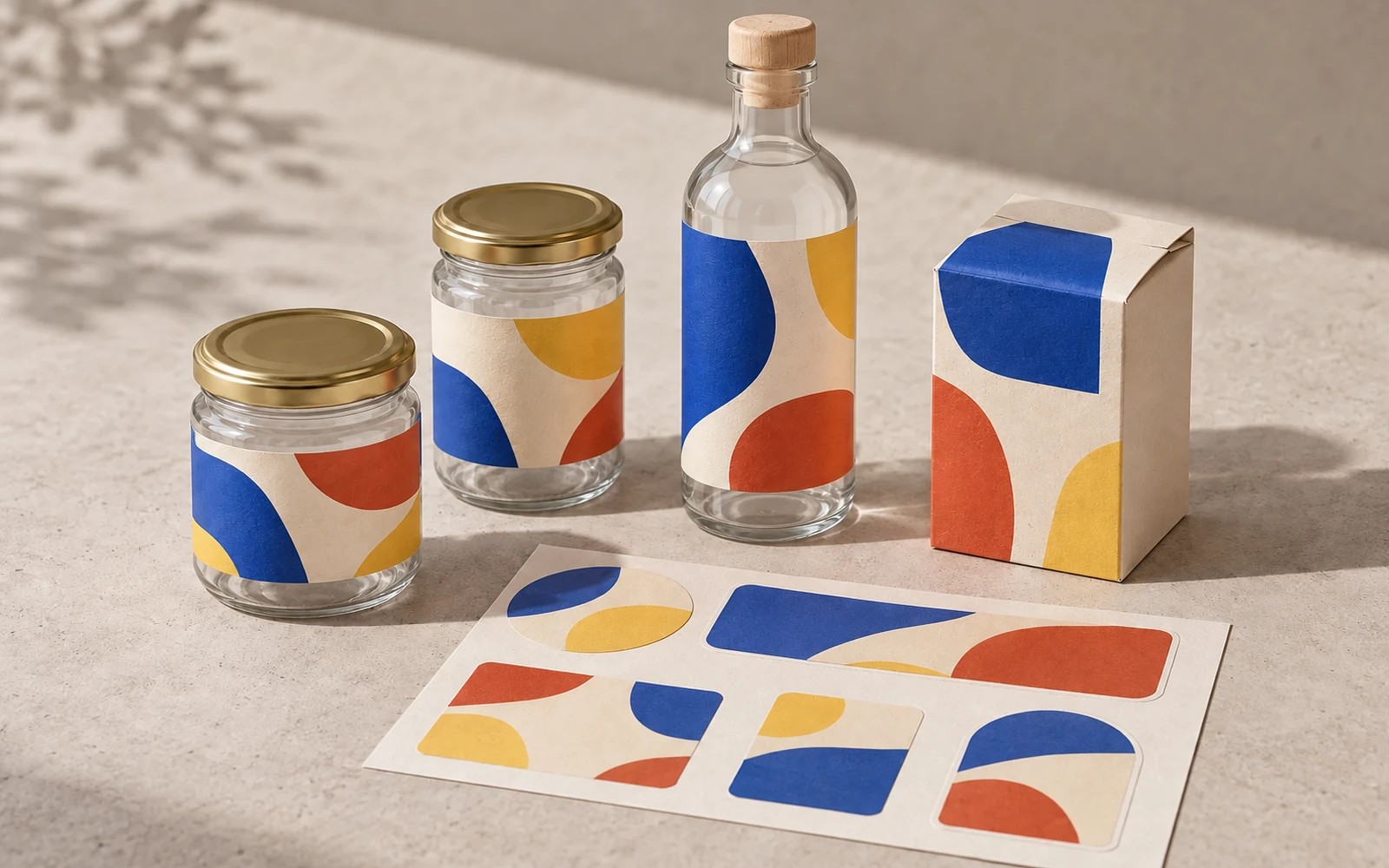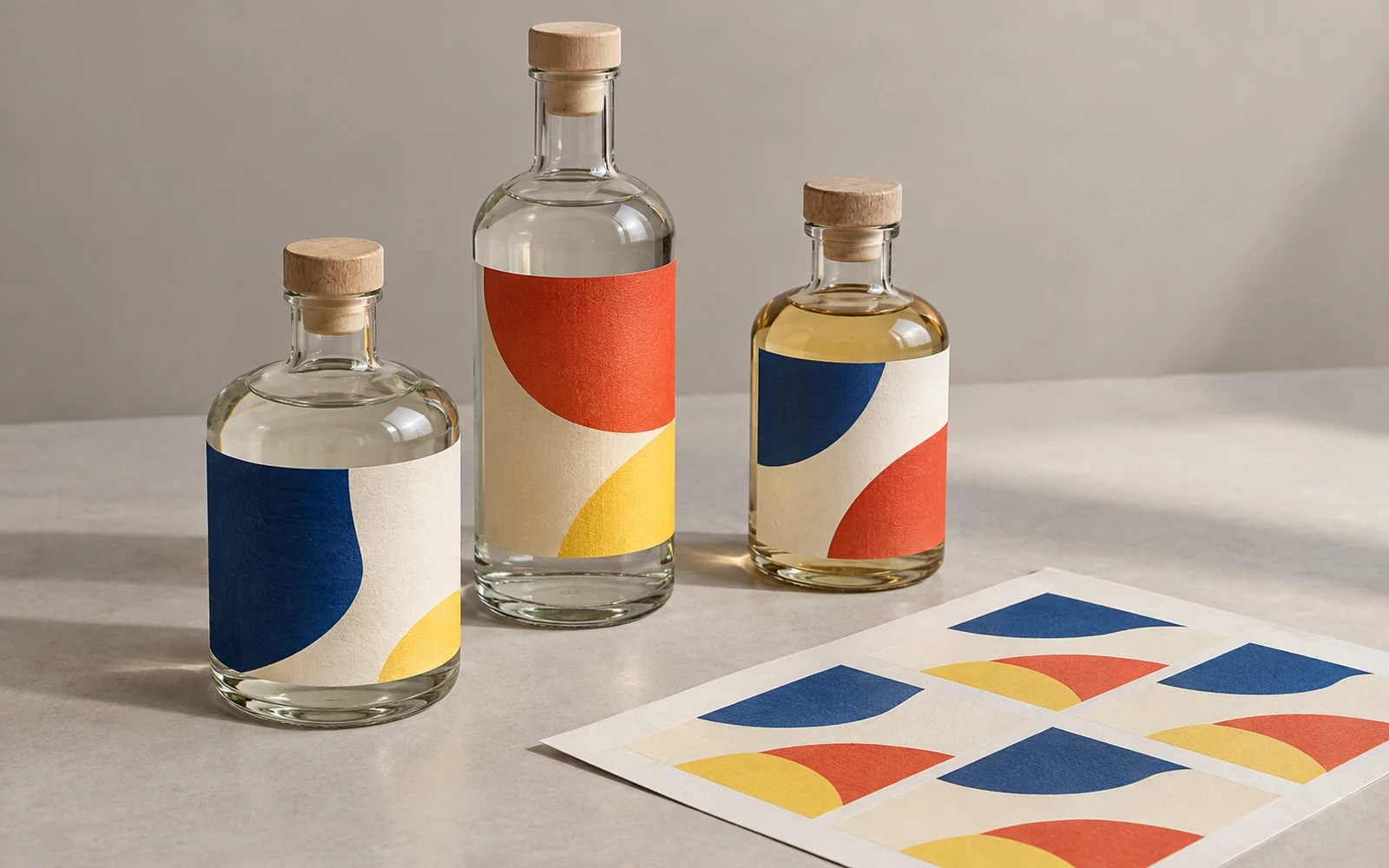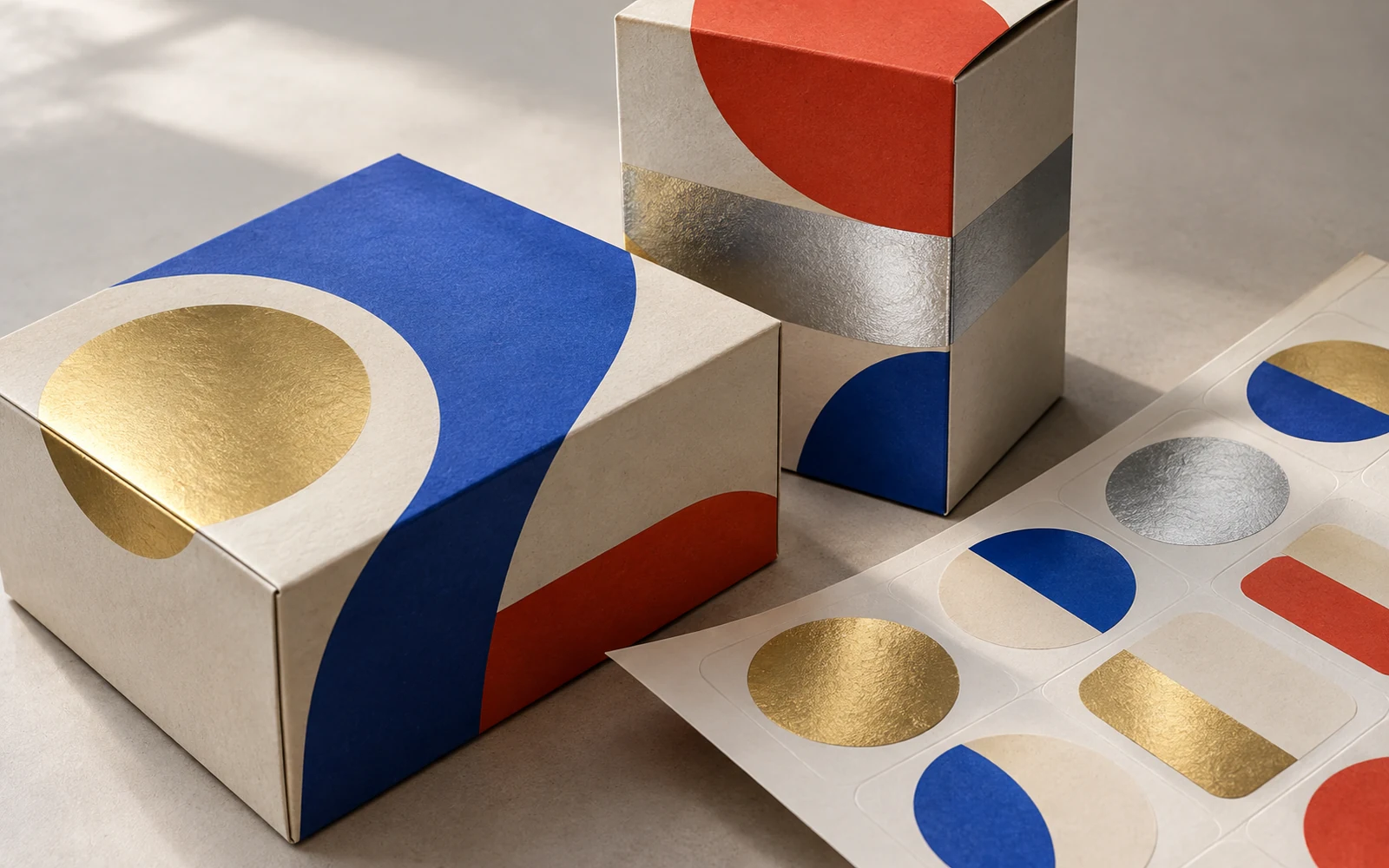
Choosing the wrong route to a metallic effect costs either tooling or texture: hot foil stamping needs a die for each design, and a flat printed finish cannot give the raised feel that hot stamping can add. On September 14, 2026, Stahl announced Senoprint, a range of silver and gold metallic coatings applied during the print run as an alternative to hot and cold foil; it had been sold in North America as LustreCoat.
Stahl, a coatings company based in Waalwijk, the Netherlands, says Senoprint creates mirror-like metallic effects directly on press, paired with its own protective topcoat, in UV and water-based versions. Its release names paper and board in sheetfed, screen, flexo and narrow-web printing; its product page adds gravure and offset. Recyclability, regulatory compliance and cost advantages are Stahl’s own claims, and the release and product page cite no third-party test, so a design team should treat Senoprint as a candidate for a press trial, not a settled replacement for foil.
Key points:
- Confirmed: Stahl announced the worldwide Senoprint range on September 14, 2026, merging its North American LustreCoat line into one brand.
- For designers: an in-line coating follows the print layout and can be overprinted for other metallic colours; Stahl does not mention relief, while hot foil can add it.
- Stahl’s claims: recyclable through standard paper recycling, engineered for REACH, GIO, PPWR and U.S. TSCA, and more cost-effective than foil; none is independently verified in the sources.
- Not covered by the release: plastic film substrates, food-contact approval, cost figures and wear data.
This article is general information compiled from public sources; no product was tested for it.
What did Stahl announce?
Stahl announced that its Senoprint metallic coatings portfolio is now available worldwide under one brand, combining the range it sold in North America as LustreCoat with Senoprint from Europe, the Middle East and Africa. The company presents the coatings as a recyclable alternative to hot foil stamping and cold foil.
| Date | Event | Source | Source type |
|---|---|---|---|
| September 14, 2026 | Stahl announces the Senoprint metallic coatings portfolio worldwide | Stahl news release | Company release (primary) |
| September 14, 2026 | Packaging Europe headlines it as “PPWR-compliant” metallic coatings | Packaging Europe | Trade media rewrite of the release |
| September 15–17, 2026 | Stahl shows Senoprint at LOUPE Americas 2026, Chicago, booth 727 | Stahl news release | Company release |
| Undated | Product page lists processes, markets and compliance positioning | Stahl product page | Company web page |
According to the release, Senoprint “currently includes silver and gold finishes, with additional metallic colours achievable through overprinting”, and every application is paired with a topcoat formulated with the metallic layer. Stahl’s wording varies in strength: the release subtitle speaks of packaging “compliant with PPWR standards”, while its body says the coatings help customers “respond to evolving packaging regulations, including” the EU Packaging and Packaging Waste Regulation. Packaging Europe’s “PPWR-compliant” headline repeats the company’s framing; it is not an independent assessment.
Takeaway: Read the launch as a rebrand plus a global rollout of an existing range, described by the manufacturer.
How in-line metallic coating differs from foil, for a designer
An in-line metallic coating is printed with the job and topcoated; hot foil uses a heated die and can add relief; cold foil lays foil onto printed adhesive on press. Those process differences decide what a designer can draw, how many tools a design needs and what the finish feels like.
| Design factor | In-line metallic coating (Stahl’s description) | Hot foil stamping (KURZ) | Cold foil transfer (KURZ) |
|---|---|---|---|
| How it is applied | Coating printed during the run, then a protective topcoat | Heated die presses foil onto the substrate | Adhesive printed, foil transferred onto it on press |
| Tactile relief | Not stated by Stahl; to be confirmed | Reliefs on paper and cardboard possible | Not described as a relief method by KURZ |
| Other metallic colours | Overprint the silver base | Choose a coloured foil | Multi-colour overprinting |
| Tooling per design | No separate foiling step or tooling, Stahl says | An individually made die per design | Printing plate for the adhesive |
| Substrates named in the sources | Paper and board (release); “flexible formats” mentioned on the product page | Paper and cardboard for relief | Folding boxes and labels; plastic self-adhesive labels in narrow web |
| Durability information | Topcoat for abrasion and handling, per Stahl; no figures | To be confirmed with your finisher | To be confirmed with your printer |
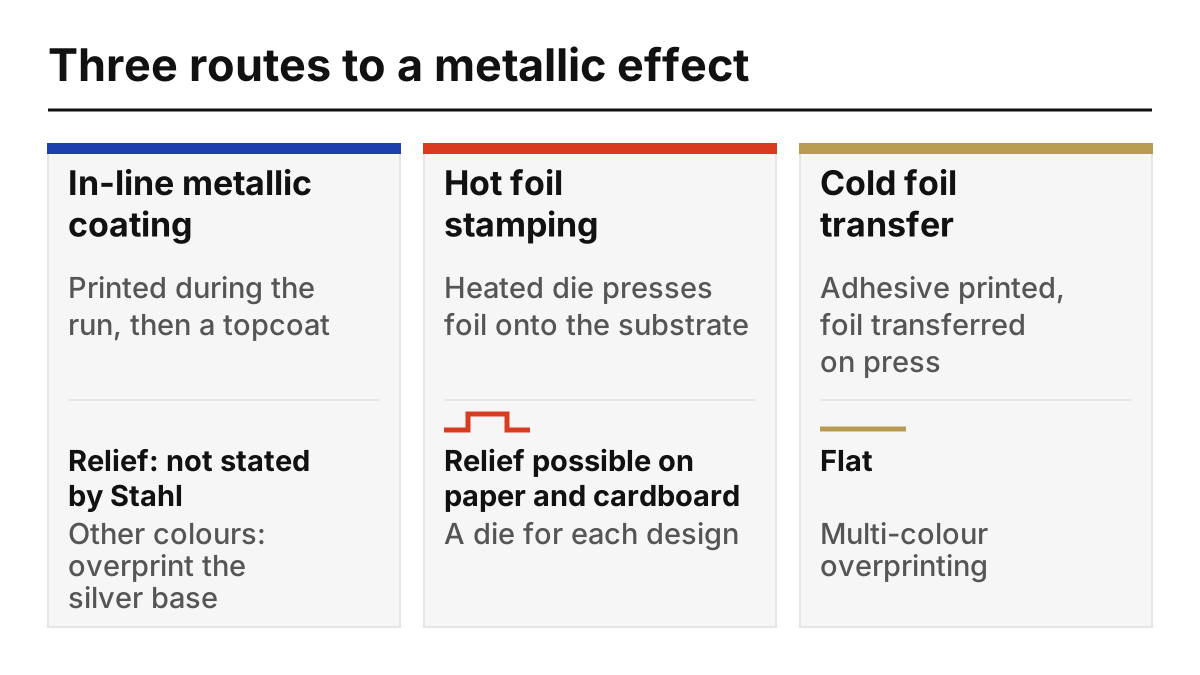
The comparison uses each supplier’s own description, so it shows differences to check, not a ranking. One design consequence follows: if the brief calls for a raised, embossed metal logo, start by asking the finisher about hot stamping with relief, and ask Stahl or the printer whether any coating route can be combined with embossing. Stahl also says that because the coating goes only where brilliance is wanted, brands avoid overprinting or masking that a metallised polyester substrate would need.
Common mistake: Swapping foil for a coating in the artwork file without telling the printer. The coating route changes separations, the topcoat layer and the proof, so the file has to be prepared for it.
Takeaway: Decide first whether the design needs relief; if it does not, an in-line coating is worth a sample.
Who is affected?
Brand owners and designers who specify metallic accents on cartons and labels are affected first, along with the converters that print them; former LustreCoat users in North America also need to map old product names to the new brand.
| Reader | What the launch means | Basis |
|---|---|---|
| Brand owner specifying metallic accents on cartons | A further in-line option to request in quotes | Release; product page |
| Packaging or label designer | Different file preparation and effect limits from foil | Process descriptions above |
| North American LustreCoat user | The LustreCoat range now sits under the Senoprint brand, which Stahl calls an “enhanced portfolio”; product codes, formulations and documents need confirming | Release; product page |
| Converter running sheetfed, flexo, screen or narrow web | Stahl lists these processes; gravure and offset appear only on the product page | Release; product page |
| Brand selling packaging into the EU | Recyclability and PPWR wording is Stahl’s claim; evidence needed for your own pack | Release |
Seasonal or short-run work makes the comparison more pressing, because each new hot-stamped design needs its own die; our explainer on digital-printed coffee valve pouches covers how frequent artwork changes are planned, on film pouches rather than board. If a brand is reworking its visual system for regulatory reasons, as under California’s AB 2249 cannabis rules, the finish choice can be reviewed in the same pass.
Takeaway: If you specify metallics on paper or board, add the in-line route to your next quote comparison.
When to act
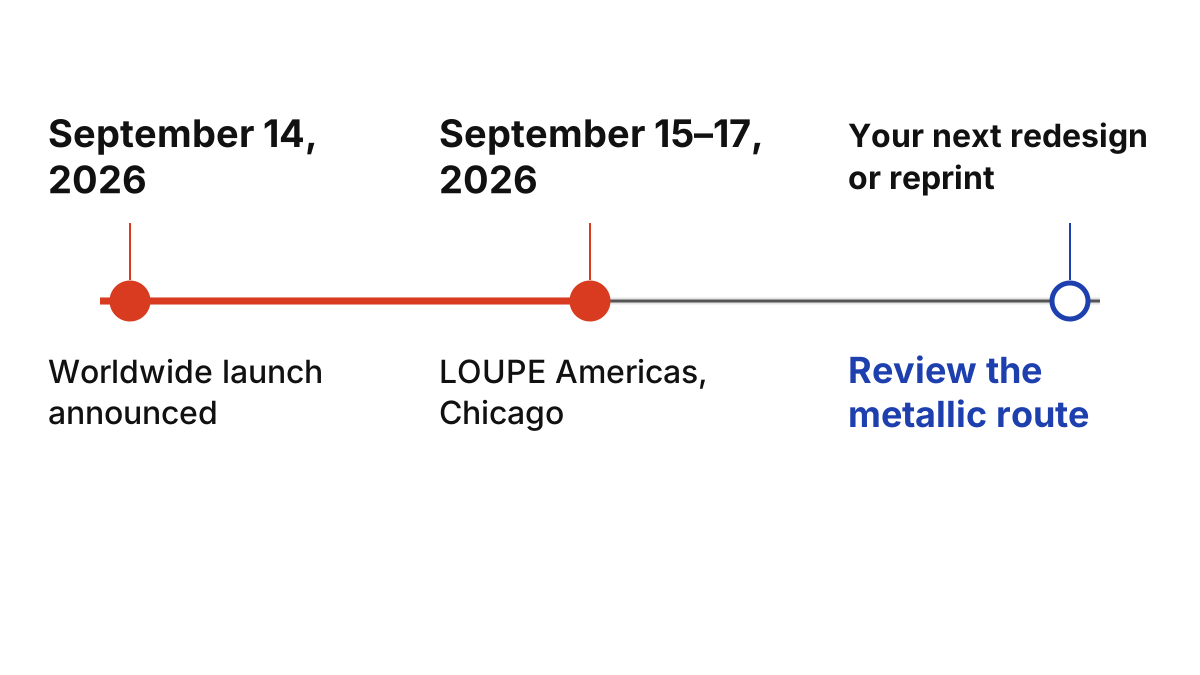
No deadline comes with the launch: the release sets no date by which users must act, and the LOUPE Americas showing (September 15–17, 2026) is over. The practical timing is your next artwork revision or reprint of a pack with a metallic finish.
| When | What is known | What to do |
|---|---|---|
| September 14, 2026 | Worldwide launch announced | Note the new name if you used LustreCoat |
| Next redesign or reprint | A changed design would need its own hot-stamping die | Ask the printer whether to sample the in-line route alongside your current finish |
| Before an EU-bound pack goes to print | PPWR recyclability obligations apply on dates set in the regulation, which the release does not state | Check the regulation’s dates and your pack’s evidence with the converter |
Takeaway: Tie the decision to your next redesign, when the finish is open for review anyway.
What Stahl’s claims do and do not establish
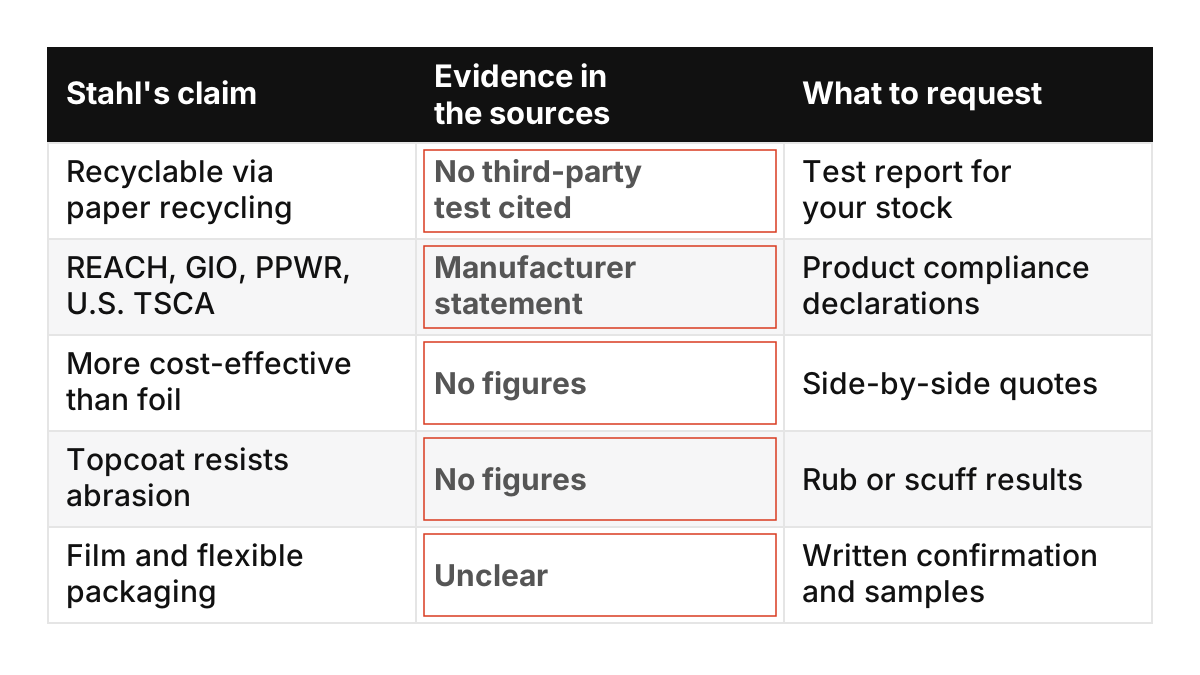
Stahl’s release and product page make performance, recyclability and compliance claims, and neither cites third-party test results for them. List each claim, the evidence that would support it and who can provide it before you print a claim or switch processes.
| Stahl’s claim | Where it appears | Evidence status in the sources | What to request | Who to ask |
|---|---|---|---|---|
| De-inkable and recoverable through standard paper recycling | Release; product page (“full de-inking and recyclability”) | No third-party test cited | Any de-inking or recyclability test report for your stock | Stahl; for the finished pack, a qualified recyclability assessor |
| Engineered for REACH, GIO, PPWR and U.S. TSCA | Product page; release subtitle and body mention PPWR | Manufacturer statement | Compliance declarations for the specific product | Stahl |
| More cost-effective than foil | Release; product page | No figures | Side-by-side quotes for the same job | Your printer |
| Topcoat resists abrasion and handling | Release | No figures | Rub or scuff results on your stock | Printer, with Stahl’s technical support |
| Indirect food contact | Product page: assessed application by application | Case by case | Assessment for your exact use | Stahl, for your specific application |
| Gravure and offset | Product page only; release lists sheetfed, screen, flexo, narrow web | Two official sources differ | Confirmation for your press | Stahl and your printer |
| Film and flexible packaging | Product page mentions “flexible formats”; release names paper and board only | Unclear | Written confirmation and samples on your film | Stahl and your converter |
Common mistake: Putting “recyclable” on a pack because the coating supplier says its product is. A recyclability claim concerns the whole pack, so it needs evidence for the finished pack.
Takeaway: Keep Stahl’s claims in quotation marks in your documents until you hold evidence for your own pack.
Design decision points before a trial
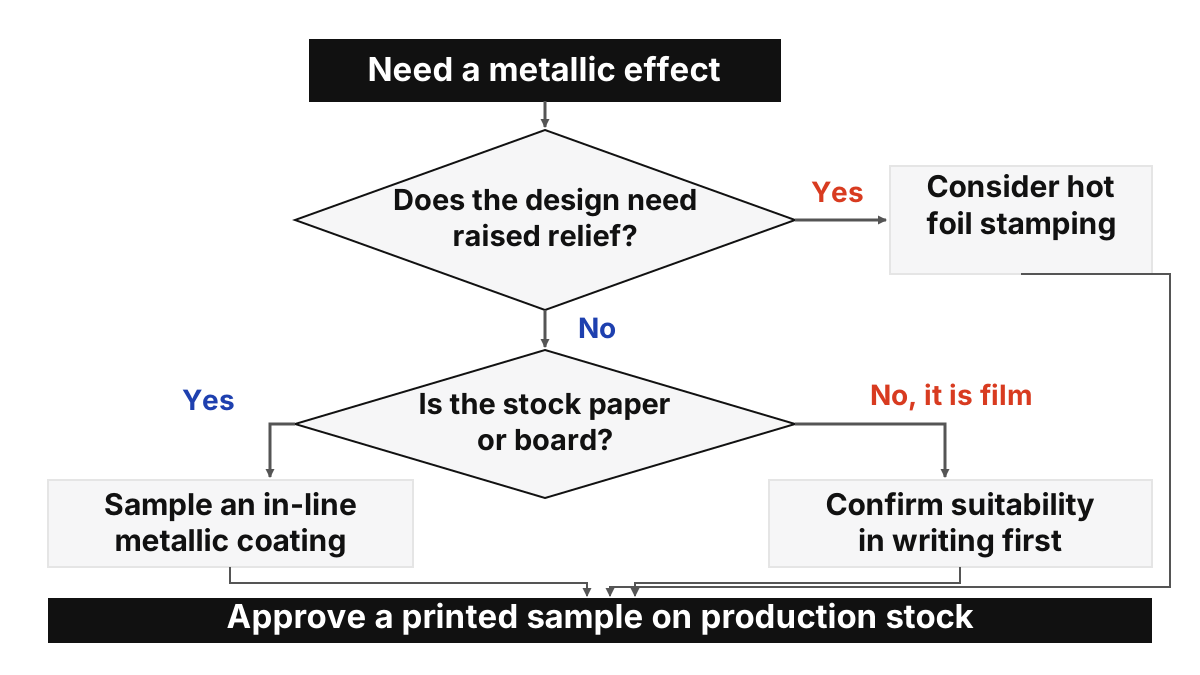
Five questions decide whether an in-line metallic coating fits a design: relief, colour, placement, stock and proof. Answer them before asking for a press trial so the sample tests the real artwork.
| Decision point | Question for the design team | Why it matters |
|---|---|---|
| Relief | Does the design need a raised or embossed metal area? | Relief points to hot stamping |
| Colour | Silver, gold or another metallic colour by overprinting? | Overprinted colours change separations |
| Placement | Which elements are metallic: logo, rules, large fields? | Coverage affects look and proofing |
| Stock | Which paper or board, coated or uncoated? | Release names paper and board; results vary by stock |
| Proof | Will you approve a printed sample on the production stock? | Screen previews cannot show metallic sheen |
If you prepare the artwork yourself, the brochure design software guide explains print-ready file basics that also apply to separations for special finishes. For label projects, the product label design guide covers label content and layout, and for grease-resistant label stock see our note on UPM Asendo 80. Metallic accents also appear in print ads; before choosing one, check the ad itself with the visual, headline and placement questions in our print advertising examples.
Takeaway: Bring answers to all five points to the printer; the sample then tests your real design.
When this does not apply
This explainer covers the design meaning of Stahl’s announcement for paper and board packaging and labels. It does not apply to plastic film or flexible packaging, which the release does not name, and it is not a compliance, food-contact or recyclability assessment. Cost and durability comparisons need quotes and tests on your own job. Stahl’s release and product page, Packaging Europe’s article and KURZ’s process pages were read on October 7, 2026; check Stahl’s current documents before relying on any detail.
Browse Labels and Packaging for more on pack artwork, Brand Graphics for brand systems, Print Design for layout and paper, and About for how this independent site works.
Takeaway: Use this page to frame the trial, and the printed sample to decide.
Related reading
- Digital-printed coffee valve pouches — Plan frequent artwork changes for short print runs.
- Product label design guide — Check label content before choosing a finish.
- UPM Asendo 80 label paper — Read another material announcement with the same claim-checking approach.