Cannabis artwork that reads as child-oriented can be ruled out of bounds in California, and a package or ad then has to be redesigned and reprinted at extra cost. AB 2249, signed on August 31, 2026, turns “attractive to children” into eight named indicators, from cartoons to bubble lettering, and its chaptered text says that definition applies to packaging, labels, ads and marketing from January 1, 2028.
California’s AB 2249 (Chapter 164, Statutes of 2026) defines “attractive to children” as designed or likely to appeal to people under 21, and lists indicators such as cartoons, people who appear under 21, characters and celebrities tied to children’s entertainment, unicorns, wizards or dragons, candy and dessert imagery, bubble-style lettering and the word “candy”. It also bars look-alikes of children’s products and cartoon fruit on edible and vape cartridge labels. The chaptered text sets the operative date at January 1, 2028, so brand teams have time to audit packaging, labels and advertising separately before then.
Key points:
- The law names design elements; it does not ban colours, finishes or packaging materials as such.
- Packaging and labels, edible and vape cartridge labels, and ads and marketing each fall under a different rule; review them as three separate streams.
- The list is open-ended (“not limited to”), and the Department of Cannabis Control (DCC) can add packaging and labeling design elements by regulation.
- Earlier drafts promised a DCC scoring rubric and binding pre-review letters; both were removed before passage.
This article is general information compiled from public sources, not legal advice. It covers visual design; product formulation, potency limits and warning text are outside its scope.
What did California enact, and when does it apply?
California enacted AB 2249 on August 31, 2026; the chaptered text adds two sections to the Business and Professions Code. Section 26141 defines “attractive to children” and, by its own subsection (e), becomes operative on January 1, 2028. Section 26142 tells the DCC to build self-assessment resources for packaging and labeling, and sets no publication date for them.
| Date | Event | Source | Source type |
|---|---|---|---|
| August 2025 | California State Auditor reports that rules on child-attractive design elements are unspecific, leading to subjective and inconsistent determinations | Assembly floor analysis quoting the audit; Governor’s release | Legislative analysis; official release |
| April 14, 2026 | Assembly Business and Professions Committee hears the March 16 version, which included a DCC scoring rubric and written pre-review | Committee analysis | Legislative analysis |
| August 2026 | Senate amendments narrow the definition, delay it to January 1, 2028, and strike the rubric and pre-review process | Assembly floor analysis (concurrence) | Legislative analysis |
| August 31, 2026 | Governor Newsom signs AB 2249; chaptered as Chapter 164, Statutes of 2026 | Governor’s release; Digital Democracy bill record | Official release; official record |
| October 6, 2026 | Dieline publishes an explainer for packaging designers | Dieline | Trade media |
| January 1, 2028 | Section 26141 becomes operative | Chaptered text, Section 26141(e) | Statute |
The governor’s release frames the law as clarifying existing protections, following the State Auditor’s recommendations; Dieline’s public summary matches the statute on the main elements and a 2028 start.
Takeaway: Treat AB 2249 as a sharper definition of a rule that already applies, with a fixed date for the sharper version.
Which visual elements does AB 2249 name?
Section 26141(a) lists eight indicators that a design is meant or likely to appeal to people under 21, and the list is explicitly not exhaustive. Two further rules sit beside it: a ban on mimicking children’s products, and a limit on fruit imagery for edibles and vape cartridges. The table translates each item into the artwork decisions a design team actually makes.
| Statute item | What it covers (paraphrased from the chaptered text) | Where it shows up in artwork | Question to ask in review |
|---|---|---|---|
| 26141(a)(1) Cartoons | Illustrated or graphic depictions of a person, animal, creature or object using stylised features of children’s animated media: exaggerated proportions, anthropomorphism, extra-human abilities, highly exaggerated expressions or emotional reactions, or other animated-character design conventions | Mascots, character illustrations, animated product icons | Does any figure use one of these stylised features? |
| (a)(2) Young-looking people | Depictions of individuals who are, or appear to be, under 21 | Lifestyle photography, illustrated people, social posts | Would a viewer read any person as under 21? |
| (a)(3) Celebrities and influencers | Images of, or references to, those primarily associated with contemporaneous children’s entertainment, media or products | Endorsements, collaborations, name mentions, reposted content | Is the person, shown or named, mainly associated with current children’s entertainment, media or products? |
| (a)(4) Children’s characters and trade dress | Images of, or references to, characters, mascots, products, brands or trade dress primarily associated with contemporaneous children’s entertainment, media or products | Parody packs, homage artwork, licensed-style art | Does the art show or refer to anything mainly associated with children’s entertainment, media or products? |
| (a)(5) Fantasy characters | Magical, fantasy or mythological characters tied to children’s entertainment, such as unicorns, wizards or dragons | Brand mascots, strain-name illustrations | Is the creature one children’s media commonly uses? |
| (a)(6) Children’s food imagery | Images of consumable goods primarily marketed to children, including candies, cereals, sweets and desserts | Flavour illustrations, product photography | Does the image show candy, cereal, sweets, desserts or other goods primarily marketed to children? |
| (a)(7) Child-style lettering | Typography resembling overinflated bubbles or balloons, or styles characteristic of products primarily marketed to children | Logotypes, flavour names, display type | Would the lettering suit a children’s snack pack? |
| (a)(8) “Candy” wording | The terms “candy” or “candies” and spelling variants such as “kandy” or “kandee” | Product names, flavour names, taglines | Does any name use the word or a variant? |
| 26141(b) Look-alikes | Packaging or labeling that imitates, mimics or closely resembles the packaging, labeling, trade dress or overall appearance of a noncannabis product primarily marketed to children | Overall pack format, colour blocking, layout | Does the packaging, label, trade dress or overall look imitate or closely resemble a children’s product? |
| 26141(c) Fruit on edibles and vape cartridges | No cartoon or overly stylised fruit on edible or vape cartridge labeling; realistic fruit used to identify or accurately depict ingredients or production region is not prohibited by this rule | Flavour cues, ingredient call-outs | Is the fruit realistic, and does it depict an ingredient or region? |
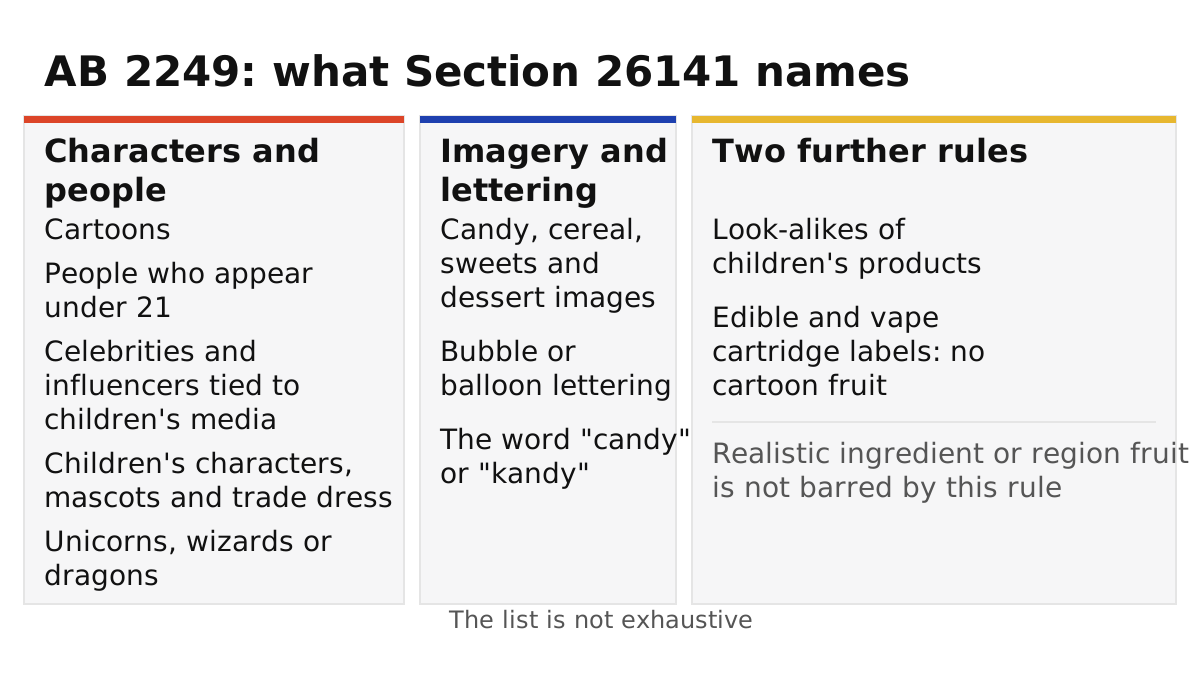
Some of these items are not new. The Assembly floor analysis notes that DCC regulations already prohibit cartoons, likenesses of images popularly used to advertise to children, imitation candy packaging and the term “candy”. What changes is the detail: a defined meaning of “cartoon”, and added named items such as fantasy creatures and bubble lettering.
Common mistake: Removing all fruit from every pack. The fruit limit applies to edible and vape cartridge labeling, and realistic fruit that identifies ingredients or the production region is not prohibited by that rule; the rest of the design still needs the full review.
If a label has to be redrawn, start from the required elements and panel layout in our label design workflow, then add the brand graphics.
Takeaway: Audit artwork element by element against the ten rows above, then judge the overall design too, because the list is open-ended.
Who is affected, asset by asset?
California licensees who design, print or place cannabis packaging, labels, ads or marketing are affected, but each kind of asset answers to a different rule. Separate them before reviewing, because a fix that clears a label can leave an ad untouched, and the reverse.
| Asset stream | Rule that governs it | What AB 2249 changes | Basis |
|---|---|---|---|
| Packages and labels (all product types) | Business and Professions Code 26120(b): packages and labels must not be attractive to children | Adds the eight-indicator definition and the look-alike rule | Chaptered text, 26141(a)–(b) |
| Edible and vape cartridge labeling | Same, plus the new fruit rule | Cartoon or overly stylised fruit not allowed; realistic fruit for ingredients or region not prohibited by this rule | 26141(c); Governor’s release |
| Advertising and marketing (print, outdoor, digital, social, point of sale) | 26152(f): no advertising or marketing attractive to children | The same definition now applies to ads and marketing | 26141(a) refers to 26152(f) |
| Structural packaging requirements | 26120(a) child-resistant, tamper-evident packaging; 26070.1 opaque exit packaging | Nothing in the chaptered text; it adds Sections 26141 and 26142 only | Committee analysis (existing law); chaptered text |
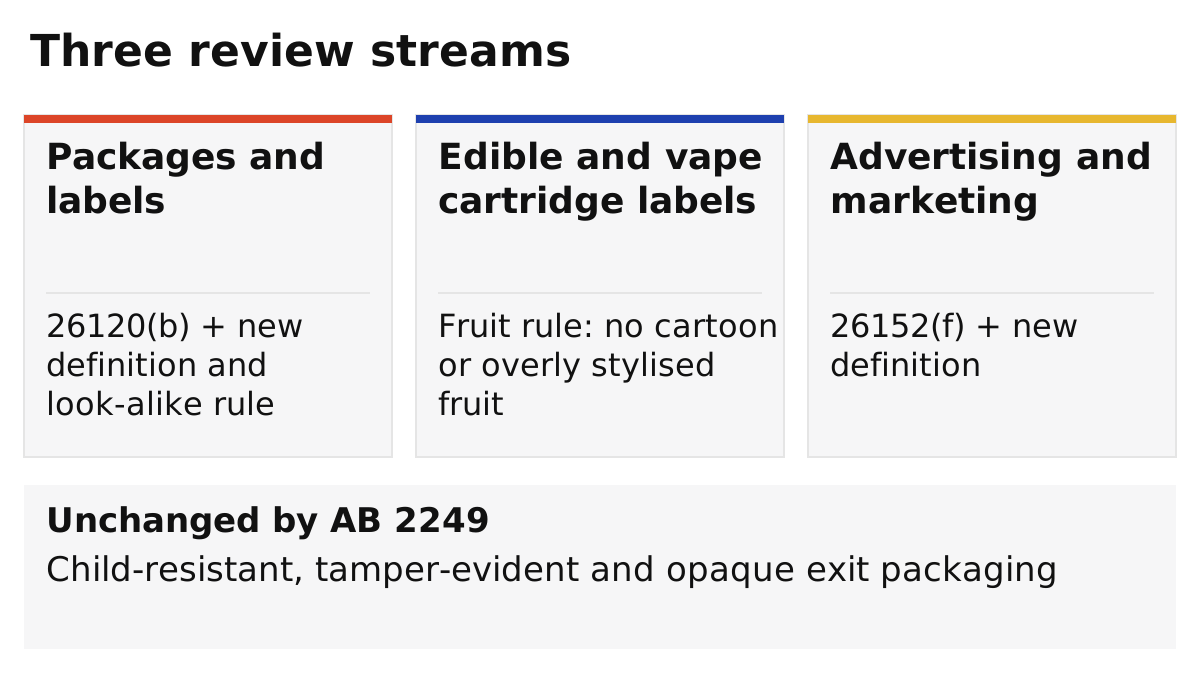
The advertising stream is easy to miss because state law defines “advertisement” so that it excludes product labels, according to the Assembly committee analysis. A brand that reworks its packs can still run a campaign, a flyer or a social post that uses a cartoon mascot. Print pieces deserve the same element-by-element pass; the questions in our guide to what makes a print ad work are a useful companion for reviewing layout and copy once the risky elements are gone.
If outside designers or printers produce your artwork, pass the review record to them with the brief. For the general layout and pre-press steps of a label project, see the product label design guide; it does not cover cannabis-specific label requirements, which need their own check.
Takeaway: Run three passes, packs and labels, edible and vape labels, then ads and marketing, and log which rule each finding falls under.
When should brand teams act?
Act now on anything that already breaks the existing ban, and plan the rest of the redesign against January 1, 2028, the operative date in the chaptered text. The existing prohibition on child-attractive packages and ads applies today; AB 2249 makes its scope more specific from that date.
| When | What happens | What to do |
|---|---|---|
| Now | Existing bans in 26120(b) and 26152(f) apply, and DCC regulations already name cartoons, imitation candy packaging and “candy” wording | Remove elements that existing rules already cover |
| Before the DCC resources appear | No publication date is given in the law or the governor’s release | Build an internal element inventory using the table above |
| When DCC publishes assessment resources | Resources for packaging and labeling: education materials, examples, guidance, possibly an automated tool | Re-run the pack and label inventory against them; use them only as a reference for ads |
| January 1, 2028 | Section 26141 becomes operative | New artwork, ads and reprints should already follow the definition |
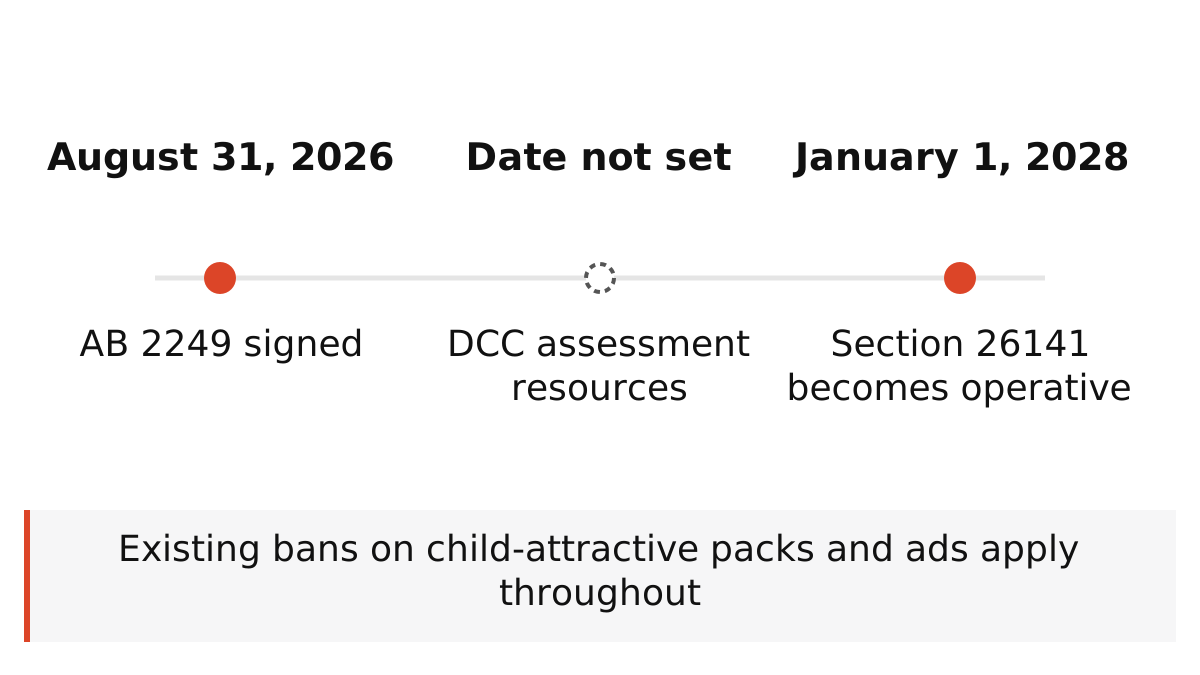
Artwork approval, print files, printed stock and campaign assets each turn over on their own schedule, so list them separately. If your packs run in seasonal or limited batches, ask each print supplier how quickly artwork can change between runs; our explainer on digital-printed coffee valve pouches shows how one printer describes low-minimum digital runs, and what its release leaves unstated.
Takeaway: Fix what the current rules already ban first, then schedule the rest so reprints after 2027 use cleared artwork.
What is still uncertain?
Open items include how the DCC will apply the list, whether it adds elements by regulation, and how current stock and running campaigns are handled. Neither the chaptered text nor the governor’s release settles them, so each belongs on a question list with an owner.
| Open item | Why it matters for design | Who can confirm | What to look for |
|---|---|---|---|
| Additional elements by regulation | 26141(d) lets the DCC address more packaging and labeling design elements or product characteristics | DCC | Proposed regulations and rulemaking notices |
| Timing and form of assessment resources | 26142 requires them but sets no date | DCC | DCC announcements and website |
| Whether a DCC tool is published, and what it covers | 26142 allows an automated tool but does not require one; its results would be advisory, not a final department determination | DCC | Tool announcement and terms of use |
| Existing inventory and campaigns after January 1, 2028 | The chaptered text we read contains no separate sell-through provision | DCC; legal counsel | DCC guidance on transition |
| How lettering and “likely to appeal” are judged | Typography and overall impression involve judgment | DCC; legal counsel | DCC examples once published |
| Penalties and enforcement approach | Not described in the release or the two added sections | DCC; legal counsel | Existing enforcement rules and DCC notices |
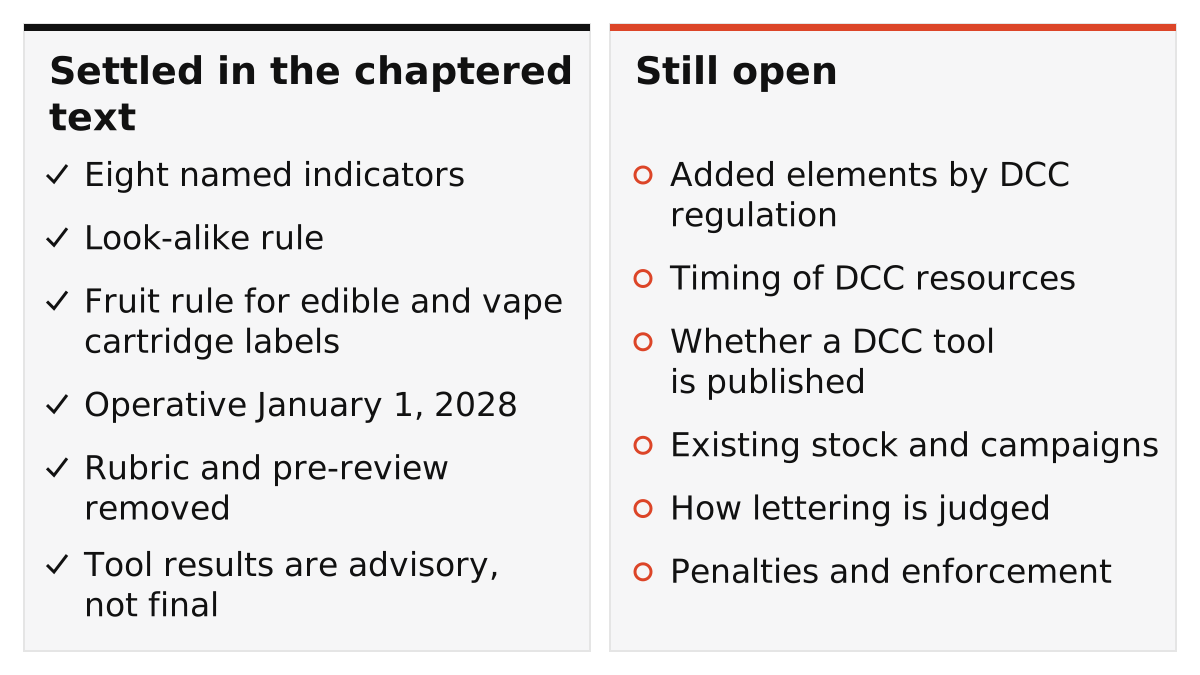
The removed rubric matters here. The March version would have required a DCC rubric by July 1, 2027 and a written determination within 30 days that bound the department; the Senate struck both, according to the Assembly floor analysis. Plan without a binding pre-clearance step.
Takeaway: Keep an open-questions log with an owner for each item, and revisit it when the DCC publishes anything.
A pre-redesign review checklist
Before briefing a redesign, record each asset, its stream and every element that matches a statute item, then decide keep, change or confirm. The checklist below turns the earlier tables into a working record you can share with a designer and with counsel.
| Step | What to record | Output |
|---|---|---|
| 1. Inventory | Every pack, label, insert, ad, flyer, social template and display piece in use or planned | Asset list with stream (packs and labels / edible and vape labels / ads and marketing) |
| 2. Element scan | Each figure, person, creature, food image, typeface and product name | Element list per asset |
| 3. Match | The statute item each element could fall under, or none | Finding with item number, for example 26141(a)(7) |
| 4. Decide | Keep, change, or confirm with counsel | Decision and reason |
| 5. Brief | Replacement direction for each changed element | Design brief per asset |
| 6. Re-check | The new artwork against the same items, and later against DCC examples | Dated sign-off |
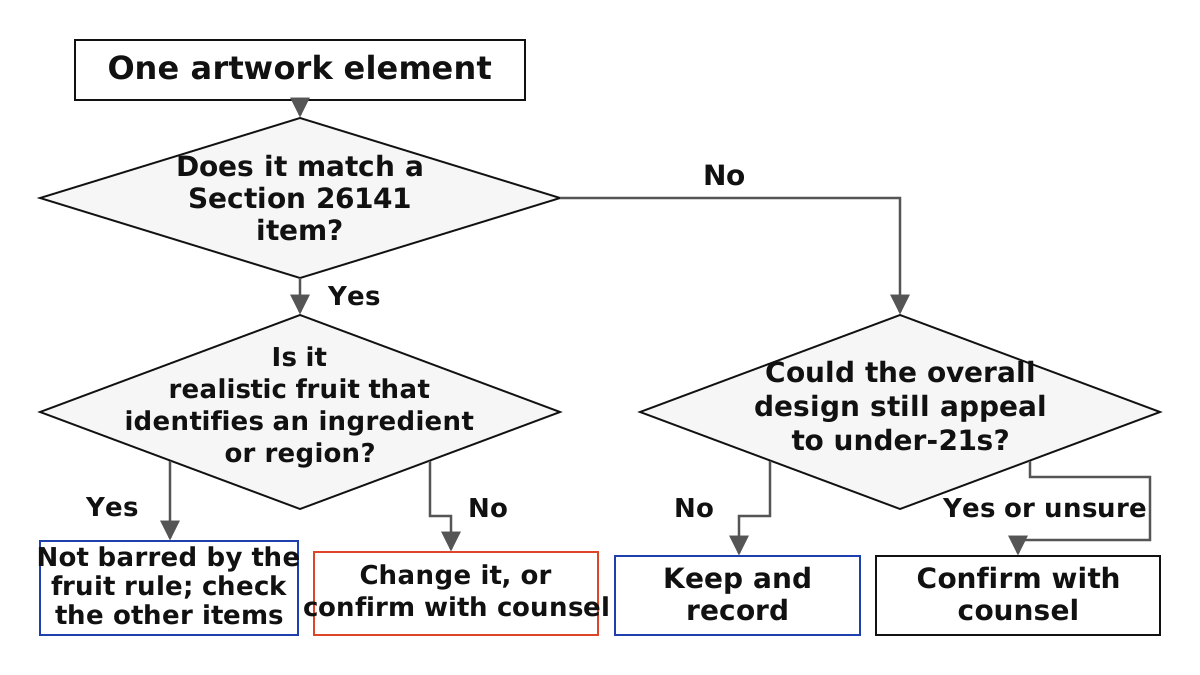
Replacement direction matters as much as removal. Removing a mascot leaves typography, colour and finish to carry the design, so check each replacement against the same items, since lettering is itself on the list. A metallic accent is a production choice that the statute does not mention, and our note on in-line metallic coatings covers how such effects are announced and what to check on press. For promotional pieces rebuilt in-house, the brochure software and cost breakdown helps scope the work.
Common mistake: Clearing the packaging and forgetting the ads. Advertising and marketing are judged under their own section, so check running campaigns and templates, not only the packs.
Takeaway: Record the statute item behind each finding, and send anything that still reads as child-oriented without a matching item to counsel.
When this does not apply
This guide covers visual elements of cannabis packaging, labels, advertising and marketing under California law. It does not apply to other states, to hemp products sold outside the licensed cannabis market, or to structural rules such as child-resistant packaging, which AB 2249 does not change. It does not assess whether a specific design complies; that judgment belongs to the DCC and, for your business, to legal counsel. Figures and dates come from the governor’s release, the chaptered text as published by Digital Democracy and two Assembly analyses, read on October 7, 2026. Recheck the DCC’s website before relying on any part of this page after that date.
For more on how brand marks and packaging graphics carry across print, browse Brand Graphics, Labels and Packaging and Print Design, and see About for how this independent site works.
Takeaway: Use this page to organise the review, and the DCC and counsel to settle it.
Related reading
- Product label design guide — Plan a label’s layout and proof steps; cannabis-specific requirements need a separate check.
- Print advertising examples by use case — Review an ad’s layout and copy once the risky elements are removed.
- Digital-printed coffee valve pouches — See how short-run print programs are announced when artwork changes often.