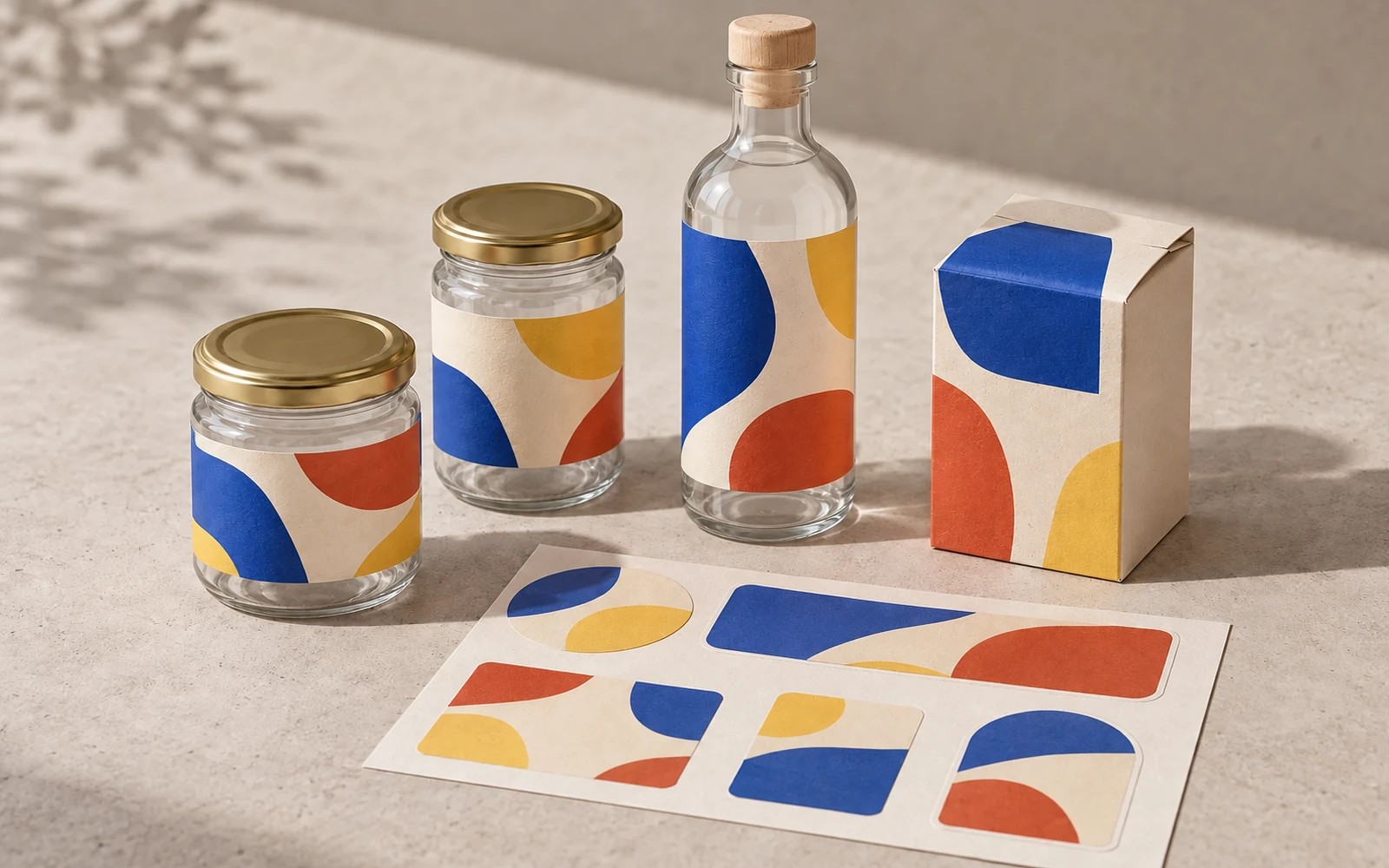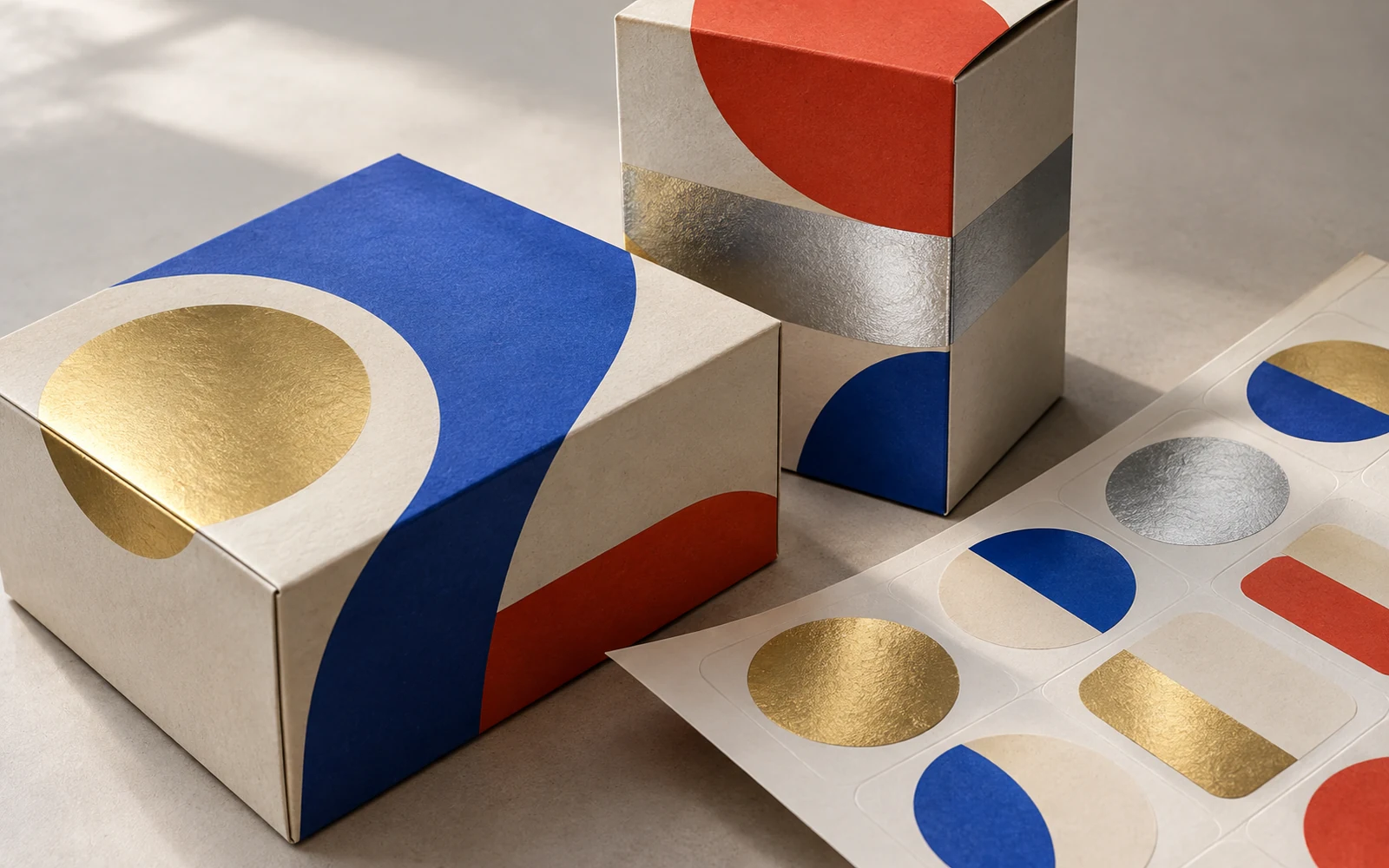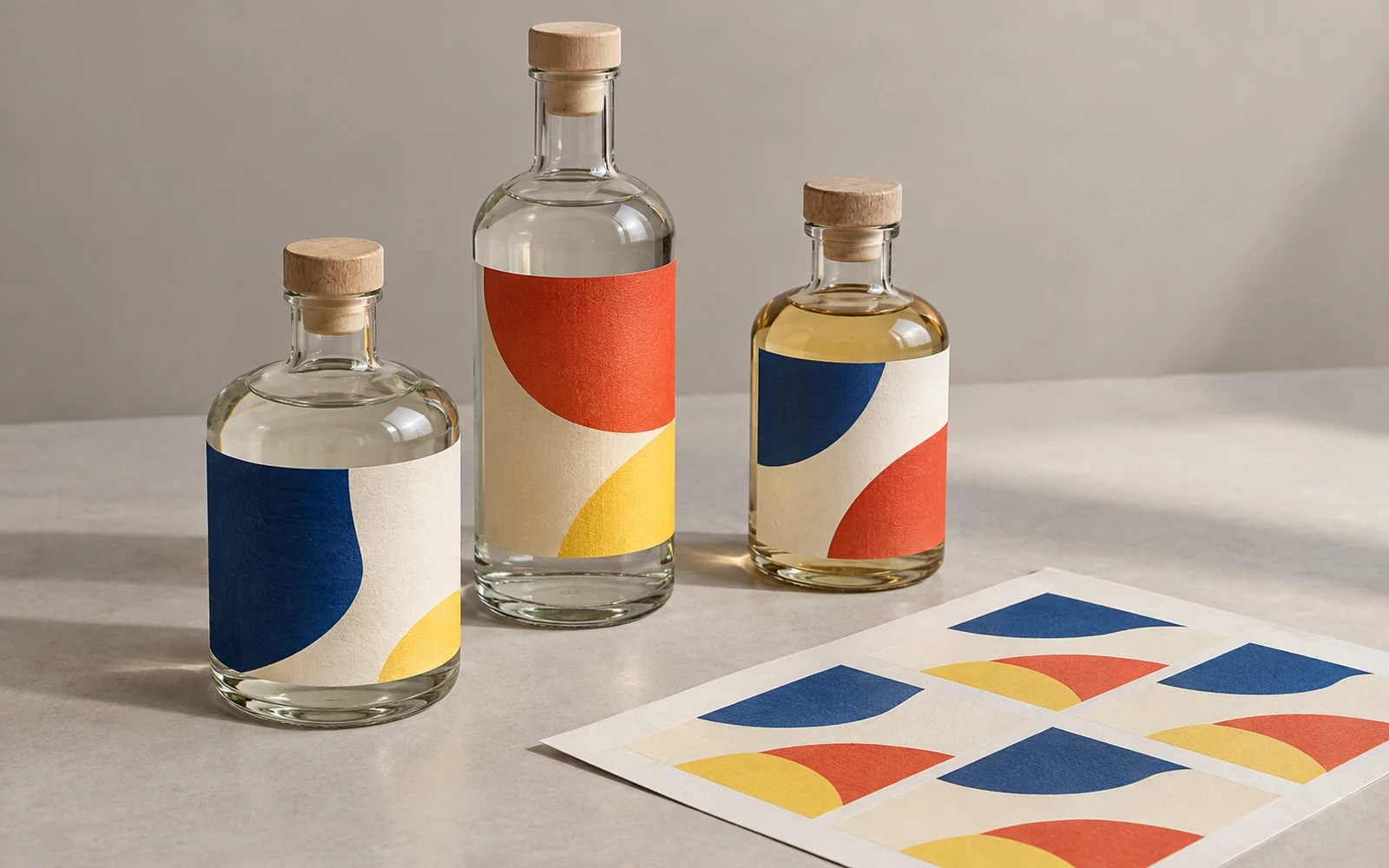
A grease-resistant label approved from a press release rather than a printed sample can fail on press or carry a claim the paperwork does not support. UPM Specialty Materials announced on September 15, 2026 that UPM Asendo 80, an 80 gsm label face paper, brings the grease resistance of its barrier packaging papers to labels without the use of PFAS; designers still need their own proofs and careful claim wording.
For a designer, Asendo 80 is a material announcement, not a print result. UPM says the paper is made without added PFAS, works with UV flexo and UV inkjet printing, is available FSC or PEFC certified and meets U.S. FDA and German BfR food-contact requirements. Its September 15 release does not give grease-resistance figures, prices, U.S. availability or ink and adhesive lists. Ask the converter for a sample printed on its own press, check artwork and ink behaviour with the actual product, and word any on-pack claim to match the documents you hold.
Key points:
- UPM announced Asendo 80 on September 15, 2026, as its first barrier label face paper.
- Every performance and compliance statement in the release is UPM’s own; no independent test data is published with it.
- The open items for designers are print behaviour on your press, colour and ink results, and what the documentation lets you say on the label.
This article is general information compiled from public sources; no product was tested for it, and it is not regulatory advice.
What did UPM announce?
UPM announced that it has extended the barrier paper technology from its packaging papers to label face papers, starting with UPM Asendo 80. The company says the grade brings grease resistance to labels without using PFAS, and that converters can request samples to test under their own production conditions.
| Date | Event | Source | Source type |
|---|---|---|---|
| August 12, 2026 | EU restriction on PFAS in food-contact packaging under the Packaging and Packaging Waste Regulation becomes applicable, as UPM’s release states | UPM release | Company summary of a regulation |
| September 15, 2026 | UPM announces UPM Asendo 80 label face paper | UPM release | Company release (primary) |
| September 15, 2026 | Packaging Europe publishes a rewrite of the release | Packaging Europe | Trade media (same release) |
The release lists the grade’s stated properties: compatible with a range of adhesive types, suited to UV flexo and UV inkjet, available FSC or PEFC certified, and meeting FDA and BfR food-contact requirements. It adds that 80 gsm is a basis weight “typically used in label end-uses” and that UPM’s technical team can advise on design considerations for a given label format. Product manager Kirsi Lahtela is quoted saying the grease resistance has been “validated over years of use in demanding packaging applications”, which refers to the packaging papers, not to published tests of this label grade.
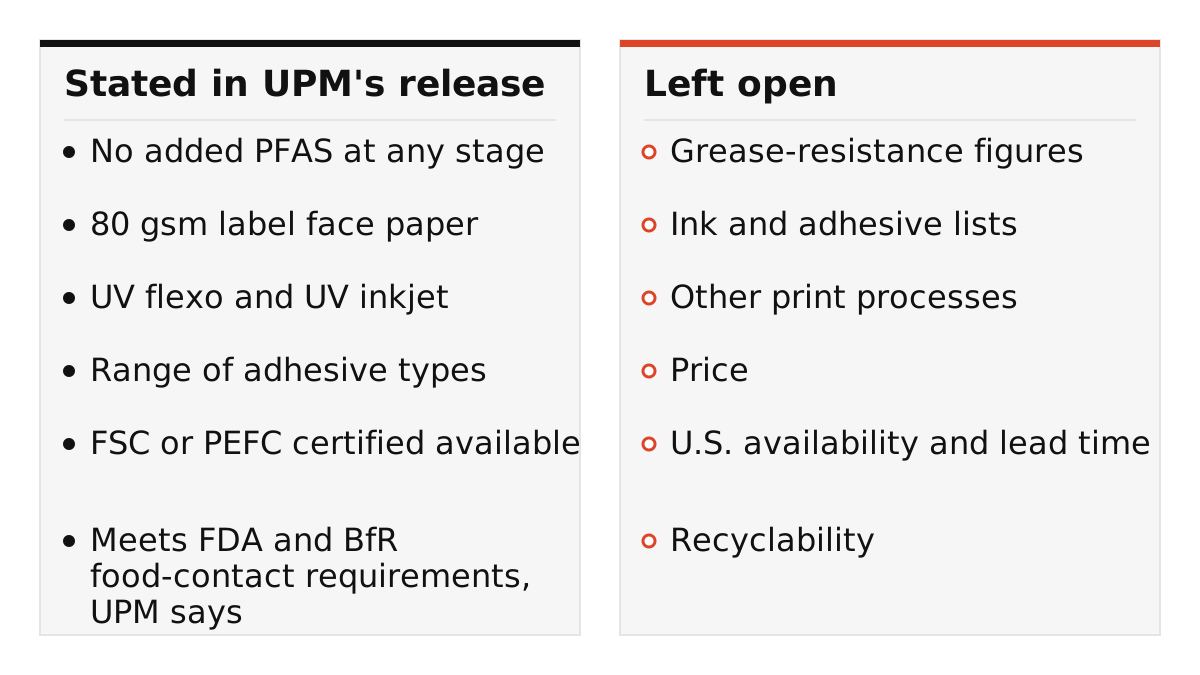
Takeaway: Treat every property in the release as UPM’s statement, to be checked on your own sample.
Who is affected?
Label converters serving food and grease-sensitive products are UPM’s stated audience; the designers and brand teams whose artwork goes on those labels are affected next, because a new face paper changes how artwork prints and what can be claimed.
| Reader | What the announcement means | Basis |
|---|---|---|
| Label converter supplying EU food or oil-sensitive products | A new face paper to evaluate against EU PFAS limits for food-contact packaging | UPM release |
| Label converter in the U.S. only | A material option; any U.S. rule questions need their own check | Our reading; the release focuses on the EU |
| Brand designer for olive oil or similar products | Artwork may move to a new stock printed by UV flexo or UV inkjet | UPM release names olive oil and these processes |
| Brand or marketing team | Any “PFAS” or food-contact wording on pack must match documentation | UPM release; our advice |
Labels that sit beside other regulated claims need the same discipline; our explainer on California’s AB 2249 cannabis rules shows an element-by-element artwork review.
Takeaway: Work out which row you are in; that decides whether the EU documentation or only the print questions matter to you.
When to act
Act when a converter proposes the paper or when you next revise a food label that faces grease. The release names no U.S. availability date, price or lead time; it says converters can request samples now.
| Trigger | Who acts | Document to ask for |
|---|---|---|
| You supply labels for EU food-contact packaging | Brand with its converter | How the label paper is documented against the EU PFAS restriction |
| A converter proposes Asendo 80 | Designer and buyer | Sample, quote, lead time |
| Next revision of a grease-facing food label | Designer | Press proof on the new stock (see the proof checklist below) |
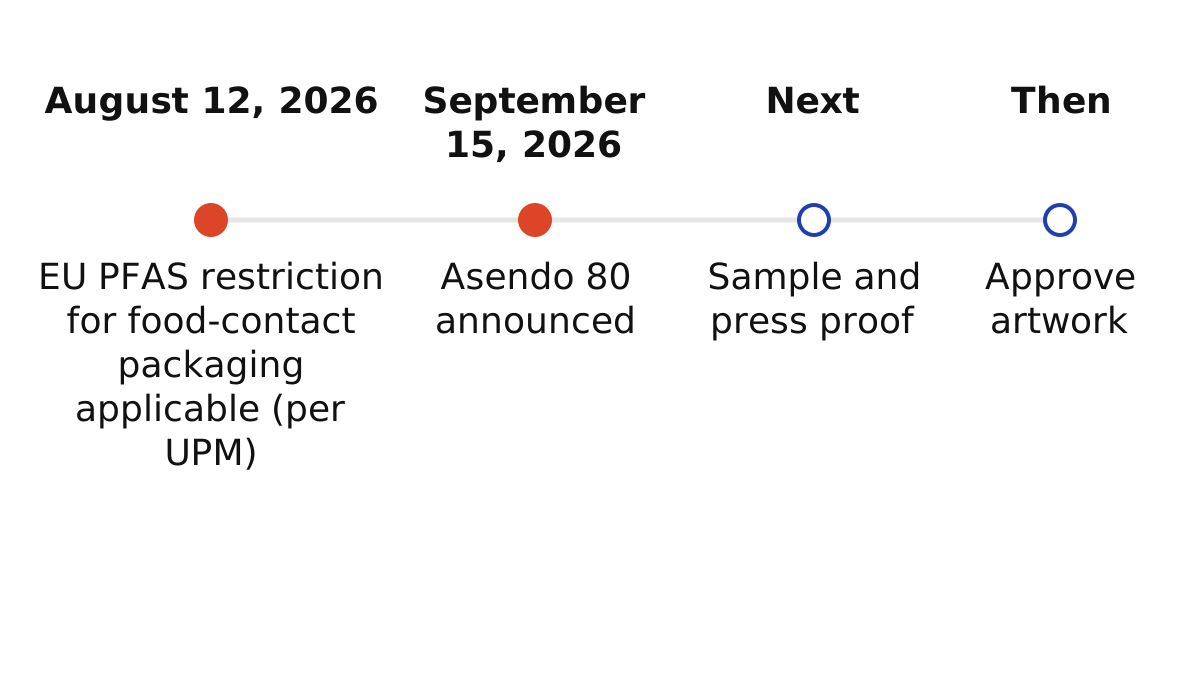
Takeaway: Start from your own trigger, not from the announcement date.
What the announcement does not settle
The release leaves out the information a designer needs to sign off artwork: measured grease resistance, how inks and adhesives behave, and commercial terms. Each gap below has someone who can answer it.
| Open item | Why it matters for graphics | Who can confirm | Document to request |
|---|---|---|---|
| Grease-resistance figures | Oil marks can ruin print and legibility | UPM via converter | Technical data sheet or test report |
| Ink compatibility list | Ink adhesion and colour on the stock | Converter; ink supplier | Ink recommendations for UV flexo or UV inkjet |
| Adhesive list | Label stays on the container | Converter; UPM | Adhesive compatibility statement |
| Other print processes | Whether non-UV processes work | UPM via converter | Written confirmation |
| Conditions for FSC or PEFC marks | Whether a certification mark can appear on pack | Converter | Chain-of-custody details for your job |
| Basis of FDA and BfR statements | What the food-contact claim covers | UPM via converter | Compliance declaration for your use |
| Price, U.S. supply and lead time | Budget and launch timing | Converter | Quote |
Common mistake: Approving colour from a PDF or from a proof on a different paper. Colour on a new face paper is only known once it has been printed on that paper.
Takeaway: Turn each open item into a written question to the converter before the artwork is final.
Print-proof questions for designers
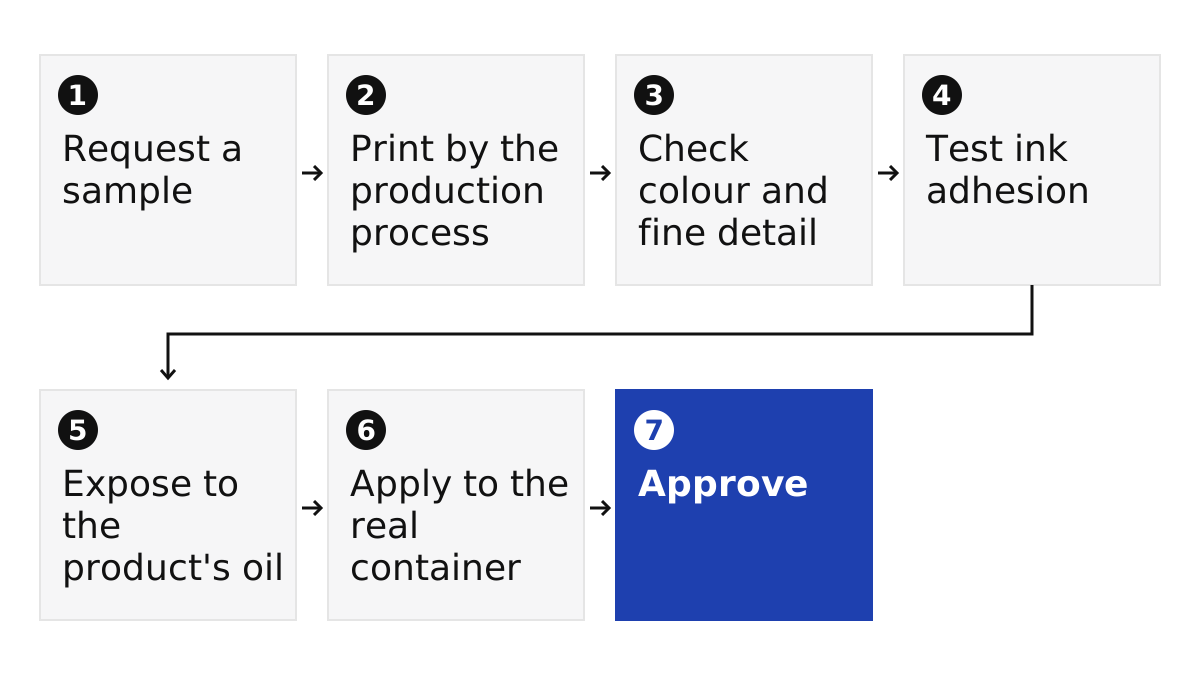
Agree the test conditions with the converter first: the real product, how the label meets it, curing, and what counts as a pass for your project. Then check the proof against the table, record the proof number, what you saw and who confirmed it, and approve only when the agreed criteria are met. The table is a planning aid; it does not replace the converter’s own qualification.
| Check | What to look at | Why it matters |
|---|---|---|
| Process match | Proof made by the production process (UV flexo or UV inkjet) | UPM names these two processes |
| Colour | Brand colours against your standard, under agreed light | A new stock can shift colour |
| Fine detail | Small type, barcodes, thin rules | Legibility of required information |
| Ink adhesion | Rub and scratch after curing | Handling in filling and transport |
| Oil exposure | Proof label wiped or stained with your product, then inspected | The reason for choosing a grease-resistant paper |
| Application | Label on the real container with the chosen adhesive | Edges and curves behave differently |
For general label layout and the information a label must carry, use the product label design guide. Finishes add another variable to the proof; our explainer on Stahl’s in-line metallic coatings covers the questions to ask about a finish before it is sampled. If you prepare files yourself, the guide to brochure design software and costs explains print-ready export basics; the converter’s file guide sets the exact requirements.
Takeaway: Approve the label only after the proof has met your product’s oil and the container.
Claim wording: what UPM’s statements support
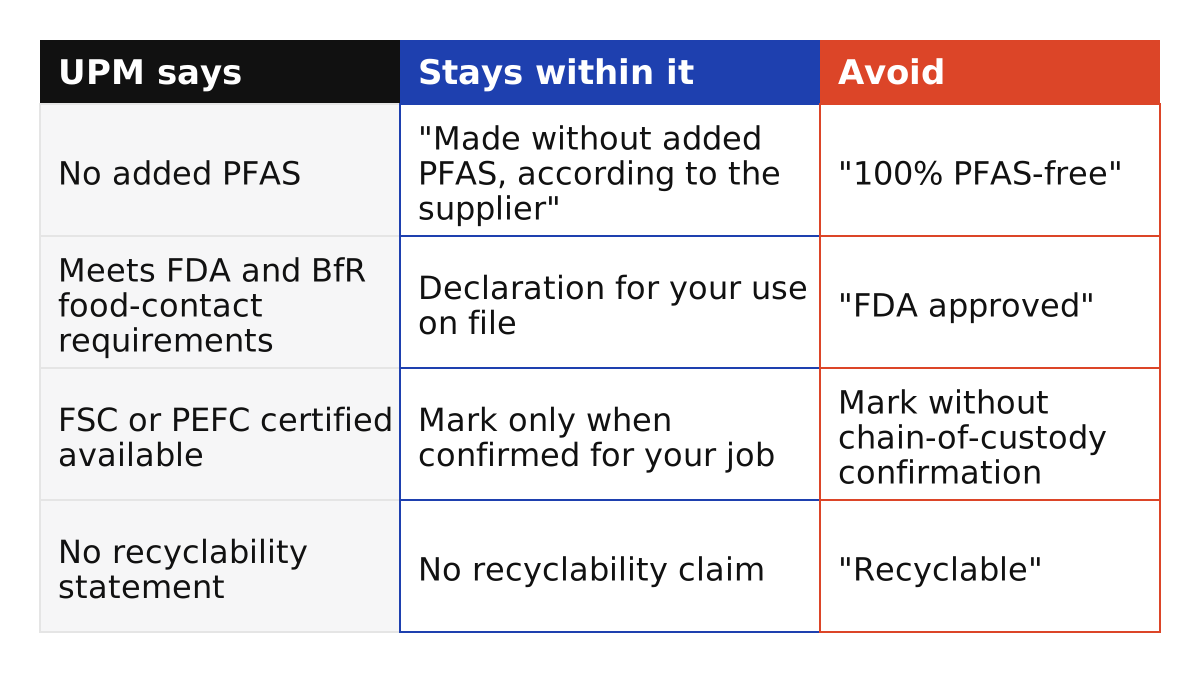
Write claims to the strength of the evidence you hold. UPM’s release supports describing what UPM says about its paper; it does not by itself support broader statements about your finished pack.
| UPM’s statement | Wording direction that stays within it | Wording to avoid without further evidence |
|---|---|---|
| Does not add PFAS at any stage | “Label paper made without added PFAS, according to the supplier” | “100% PFAS-free” or “tested PFAS-free” |
| Each grade tested by independent laboratories | Keep the test documents on file before citing them | Naming results you have not seen |
| Meets FDA and BfR food-contact requirements | Ask for the declaration covering your use | “FDA approved” or “FDA certified” |
| Available FSC or PEFC certified | Use a certification mark only when the converter confirms it for your job | A mark on pack without chain-of-custody confirmation |
| Grease resistance from barrier technology | Describe the label as grease-resistant only after your own test | “Oil-proof” or comparisons with other papers |
| No recyclability statement in the release | No recyclability claim based on this release | “Recyclable” |
Check the rest of the label against the required elements for your category in our product label design guide. The same caution applies to any supplier announcement; our explainer on SunDance’s coffee valve pouches lists which freshness and recyclability claims a release leaves undocumented.
Common mistake: Turning “no added PFAS” into “PFAS-free”. The supplier’s wording is narrower, and the label claim should be no stronger than it.
Takeaway: Copy the supplier’s exact wording into your claim review, then decide what your own documents add.
When this does not apply
This explainer covers the graphic, proofing and wording side of UPM’s announcement for food and oil-sensitive labels. It does not assess regulatory compliance in the EU or any U.S. state, does not compare Asendo 80 with other label papers and does not cover adhesive engineering. UPM’s release and Packaging Europe’s article were read on October 7, 2026; ask the converter for UPM’s current technical documents before relying on any detail.
More pack artwork topics are in Labels and Packaging, brand-system topics in Brand Graphics, layout and paper topics in Print Design, and About explains how this independent site works.
Takeaway: Use this page to plan the proof and the claim review; use the converter’s documents to decide.
Related reading
- Product label design guide — Check the information every food label has to carry.
- Metallic effects without foil — Review another supplier announcement claim by claim.
- Digital-printed coffee valve pouches — Plan quote questions for a new packaging format.